INDUSTRIAL HERITAGE AND CULTURAL ELEGANCE
TERRACE HOUSE MIRAGE
TYPE : Housing
LOCATION: Chippendale, NSW
YEAR: 2023
Serious ambition and a singular aesthetic redresses the common pitfalls of the terraced house with intelligence, imagination and joy.
In the mid 1990s, I read Robert Hughes’ Culture of Complaint, a book that in many ways forewarned of the pitfalls of the identity politics we see today. Specifically, it compared a combative multicultural dialogue in the USA, based on reinforcing difference with what he saw as a more cohesive cross-cultural project in Australia. A few years later, Richard Blyth wrote a foundational text for the practice that eschewed the Anglophone focus on objects in the landscape, embracing instead the complexity and indeterminacy that comes with a rich multicultural population.
Two decades on, and Noel Pearson’s conception of Australia as a place gifted with an Indigenous heritage, a British democracy and a multicultural society, is being tested. At least the architectural profession is finally starting to address questions of Country and to discuss spatial nuances in regard to gender. Yet, with the exception of two notable mosques by Glenn Murcutt and Candalepas Associates, we have not really seen a significant body of work address the complex fabric woven between diverse cultural groups. Multiculturalism raises important architectural questions, primary among them spatial organisation and formal language. For a country in which 40 percent of residents in the major cities doesn’t speak English at home, our architectural production remains strongly Anglo-centric.
Enter Alcami Architecture, a practice run by Victor Alcami, a Catalan architect who arrived in Australia more than 10 years ago as one of many architects who left Spain in the wake of the global financial crisis. In a decade here, amid various attempts to start a practice or to work for others, he met Bruno, a Spaniard who came to Australia 40 years ago and who introduced himself to Victor after hearing the architect speaking Catalan in the street. Some years of friendship later, Bruno asked Victor to design the renovation of his small Chippendale terrace.
The terrace extension is a well-known typology in Sydney and one that has seen so many iterations since the 1980s that it could be considered a field of limited interest. Everything that can be done has been done. Terrace House Mirage, designed by an architect from elsewhere for a client from elsewhere, breathes new life into the type. Victor’s sharp intelligence and perspective from abroad meant that he saw the terrace not as a Sydney question, nor as something imported from England: rather, it’s a Belgian typology that migrated to England before migrating here.
Victor observes that terrace houses are everywhere, “a typology from another time, from another place, for another climate, for people with other lives.”
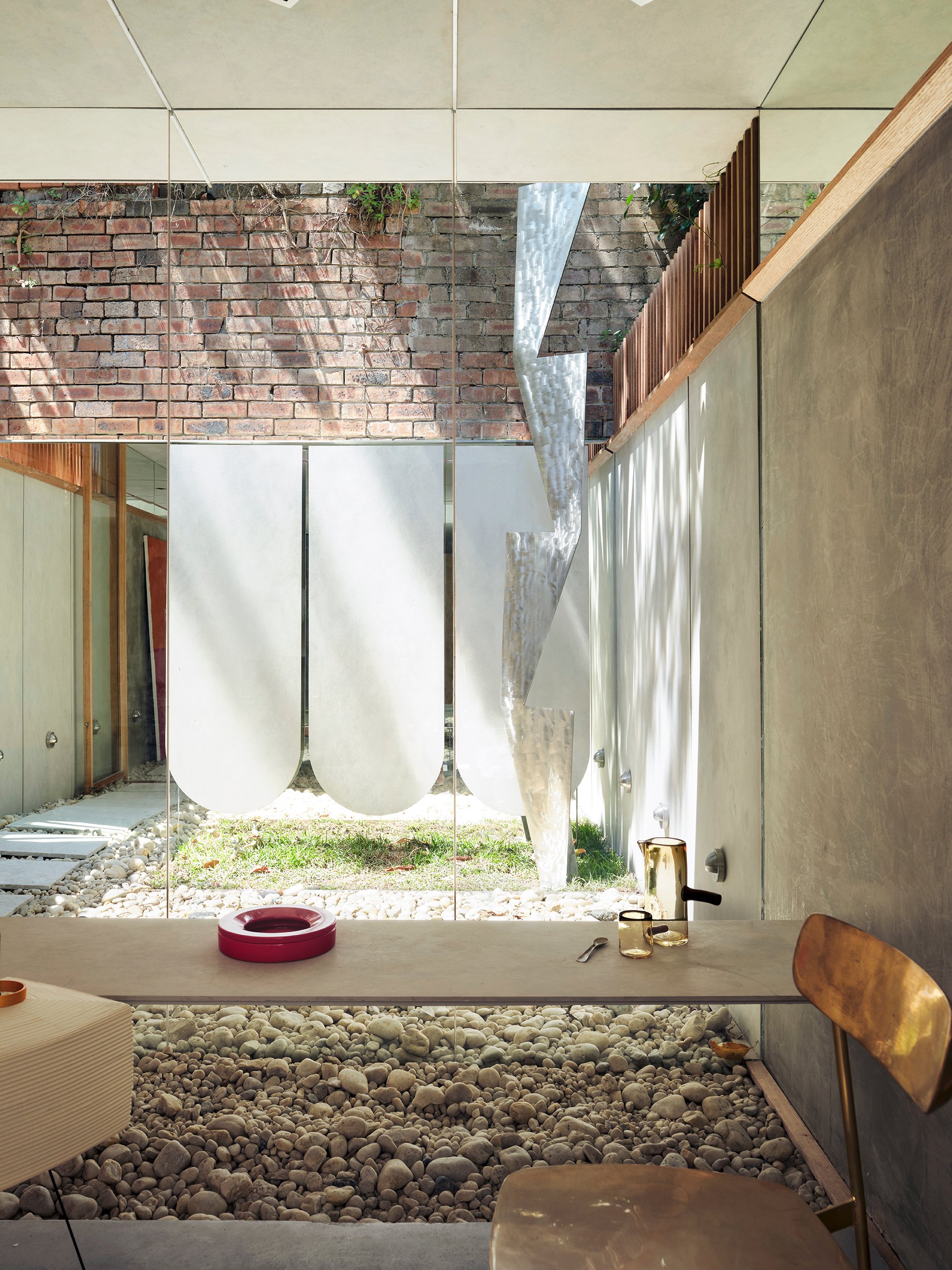
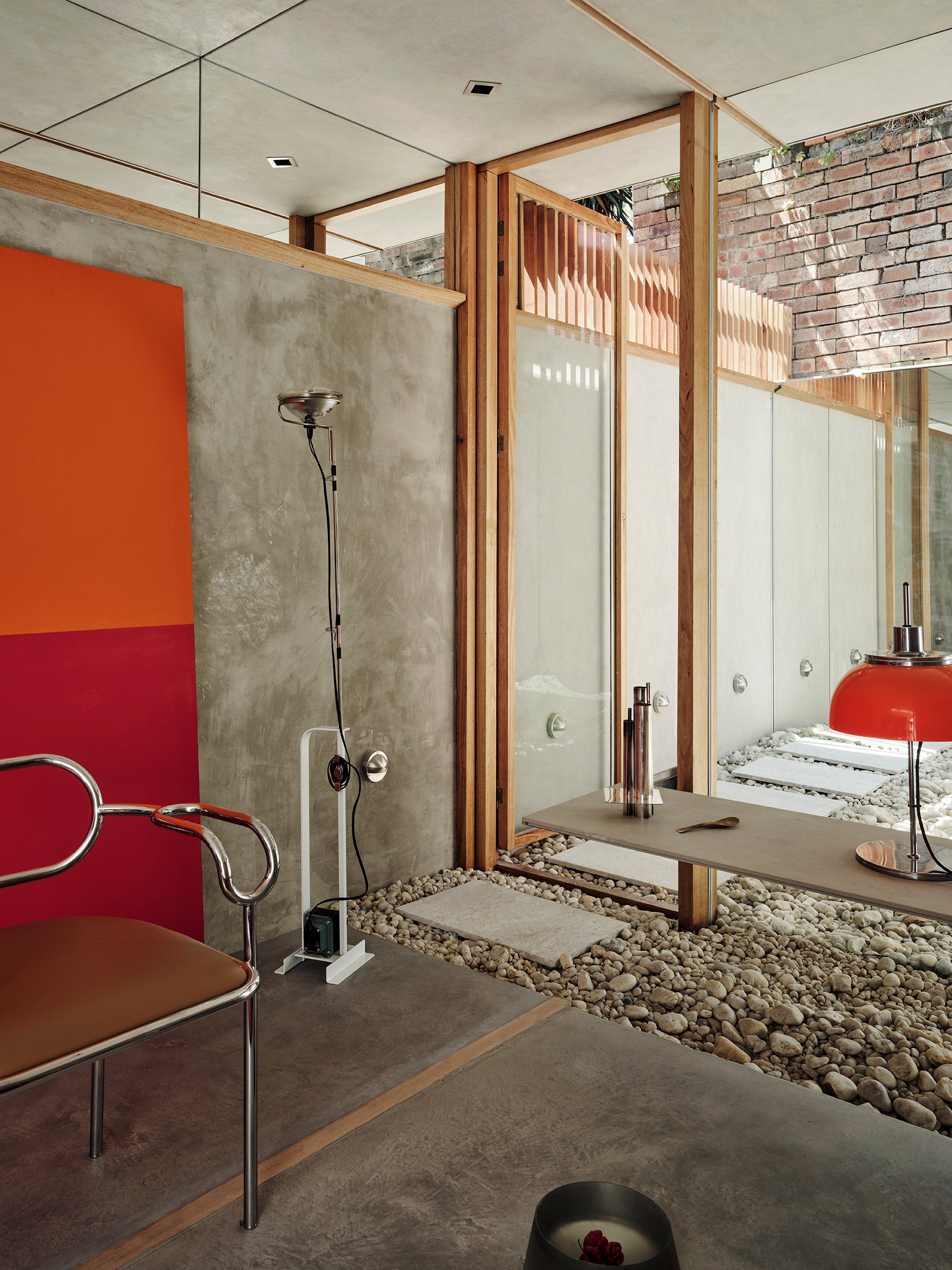
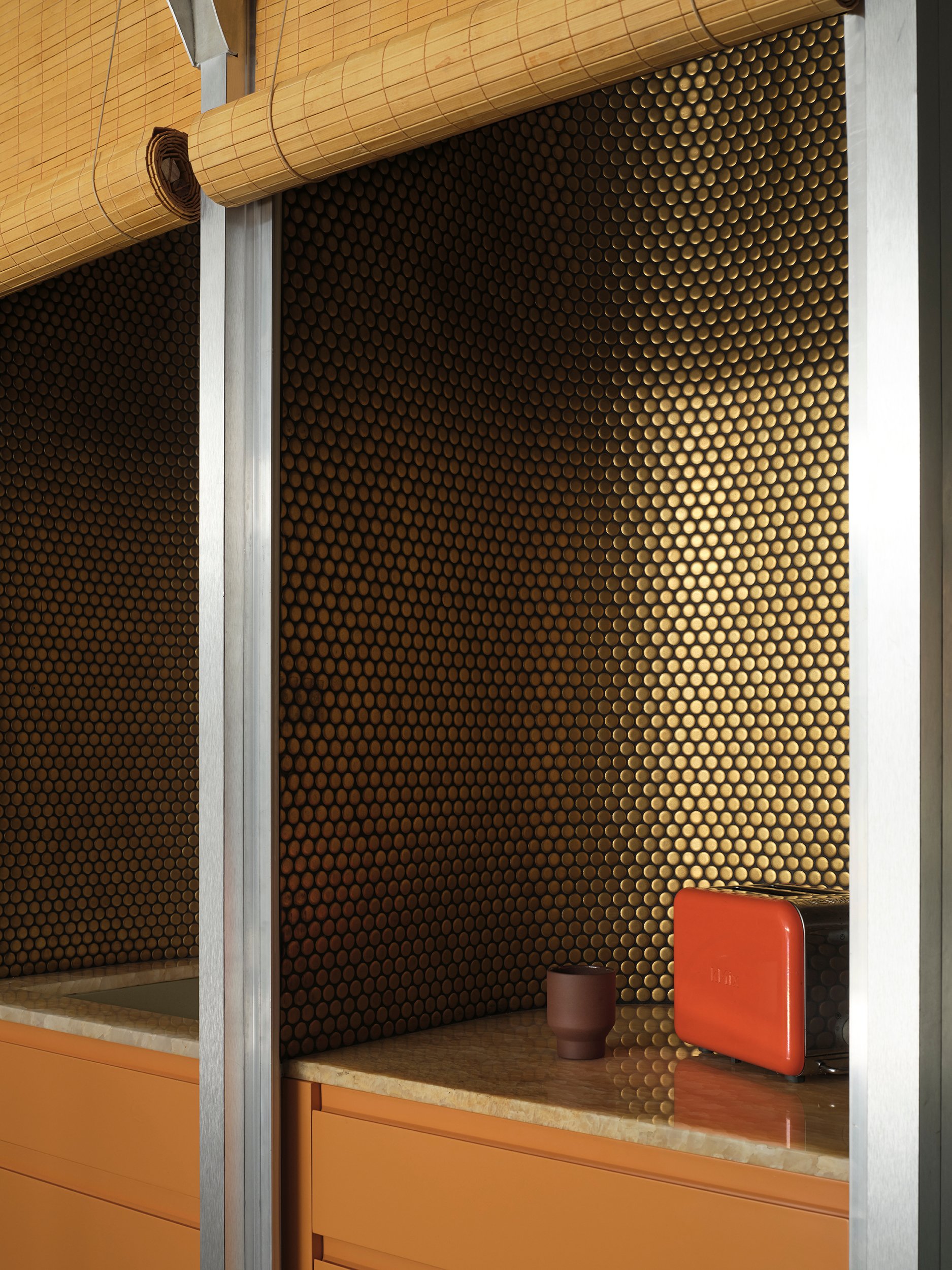
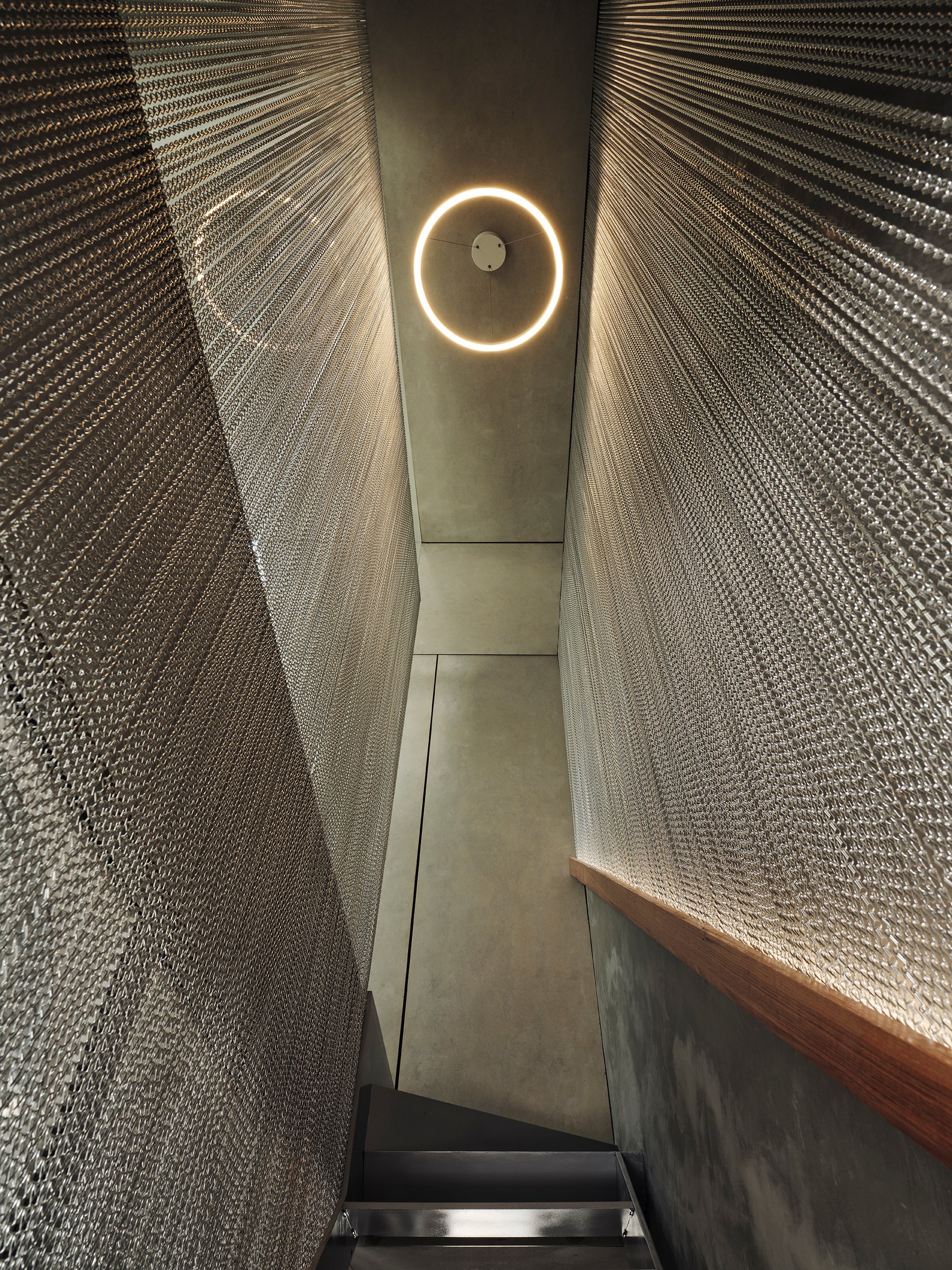
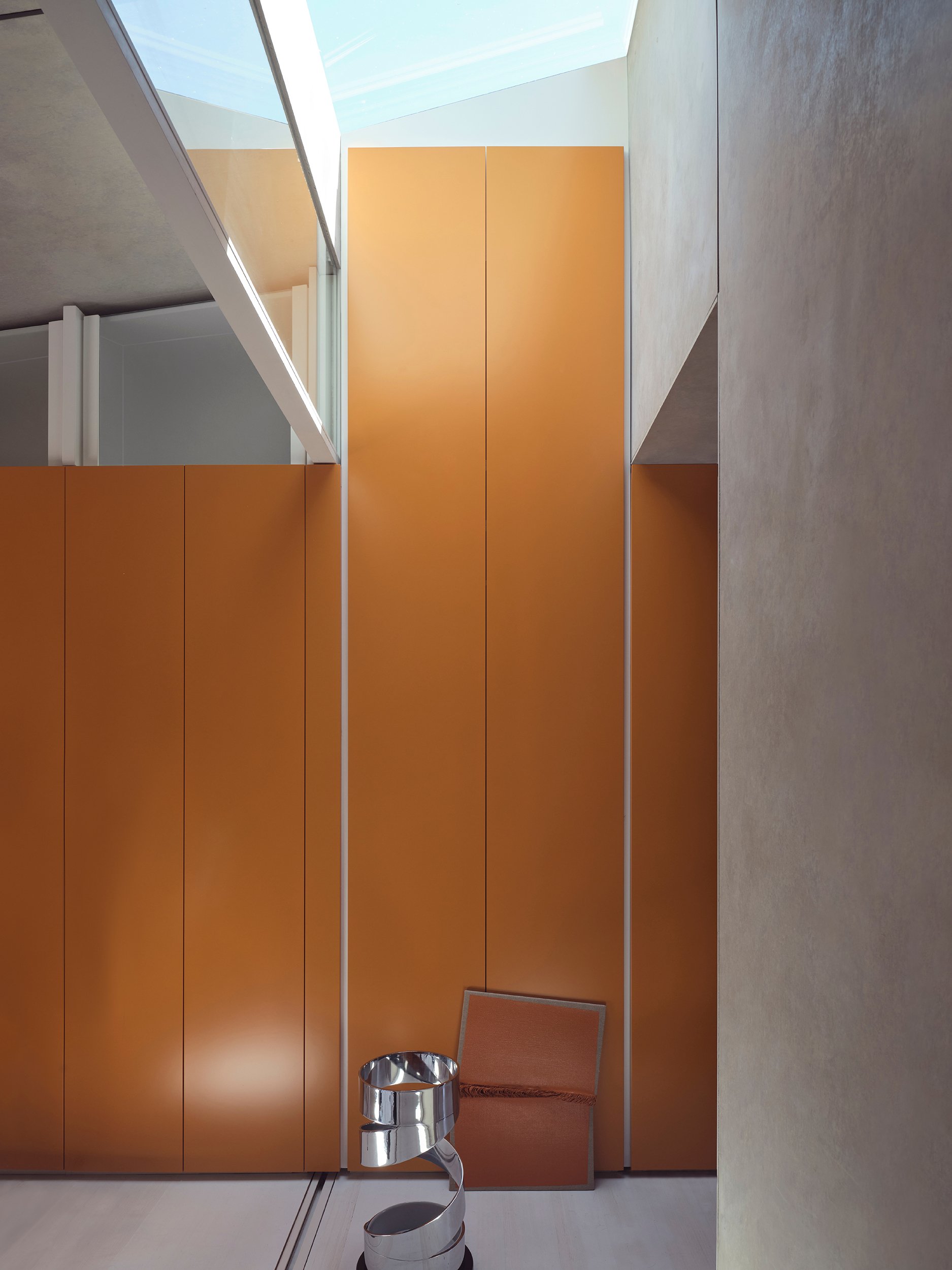
Bruno’s family is from southern Spain – a place influenced by Arabic heritage – where domestic spaces are different to here. They featured courtyards that borrow landscape from adjacent neighbours, and spatial devices such as metal chains in doorways as flyscreens and roller blinds for sunshade and privacy. Bruno also likes orange. Victor’s renovation takes this unlikely mix of elements and adds in the mirrors of Adolf Loos’s American Bar in Vienna, the one-point perspective of Stanley Kubrick’s films, the indoor–outdoor connection of Donovan Hill’s D House and the bravery in materials and finishes of 1970s and 1980s Italian interiors – an expanded “cloud” of references and histories that he has almost magically coalesced into a surgically tight and cohesive project.
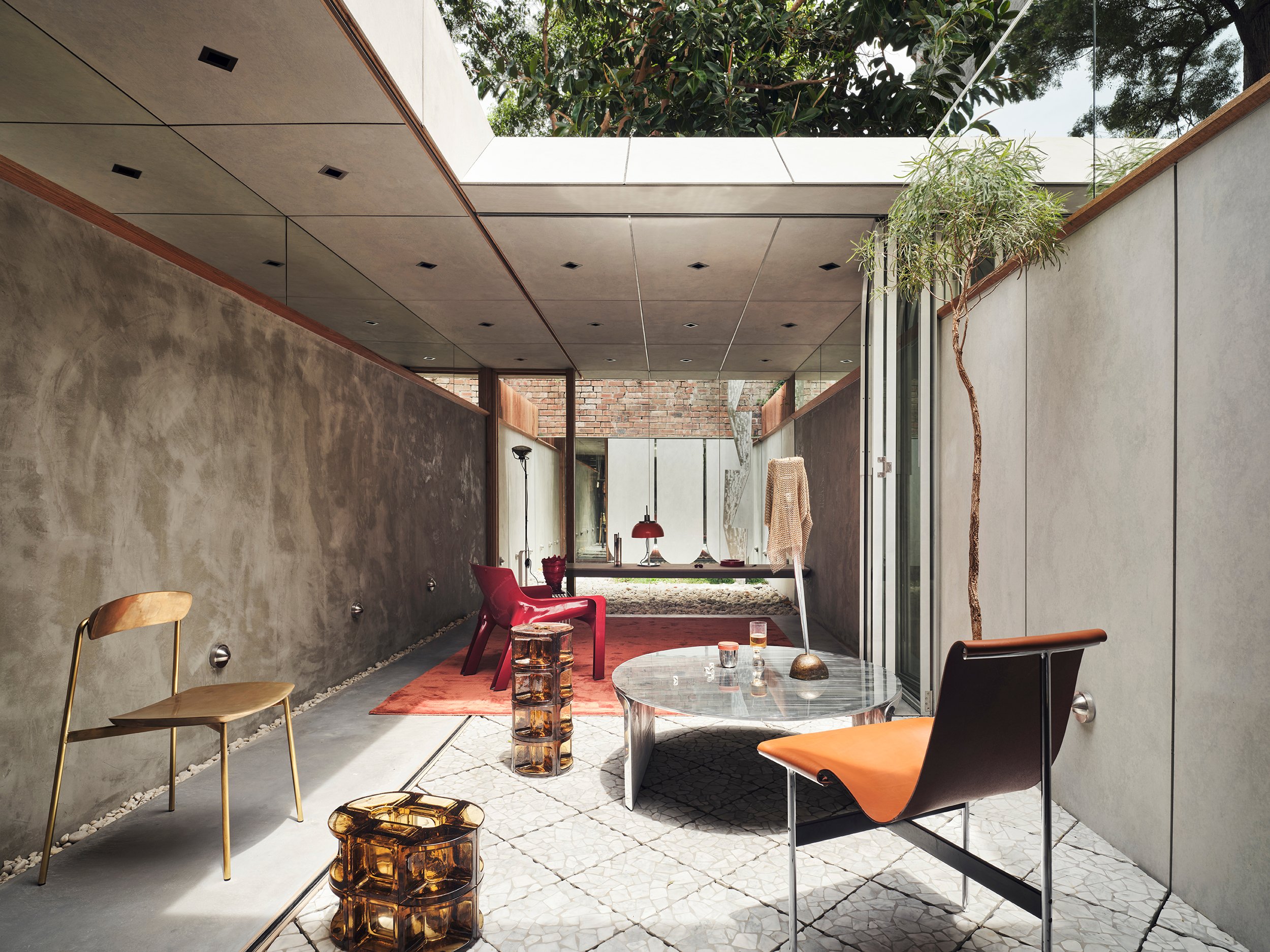
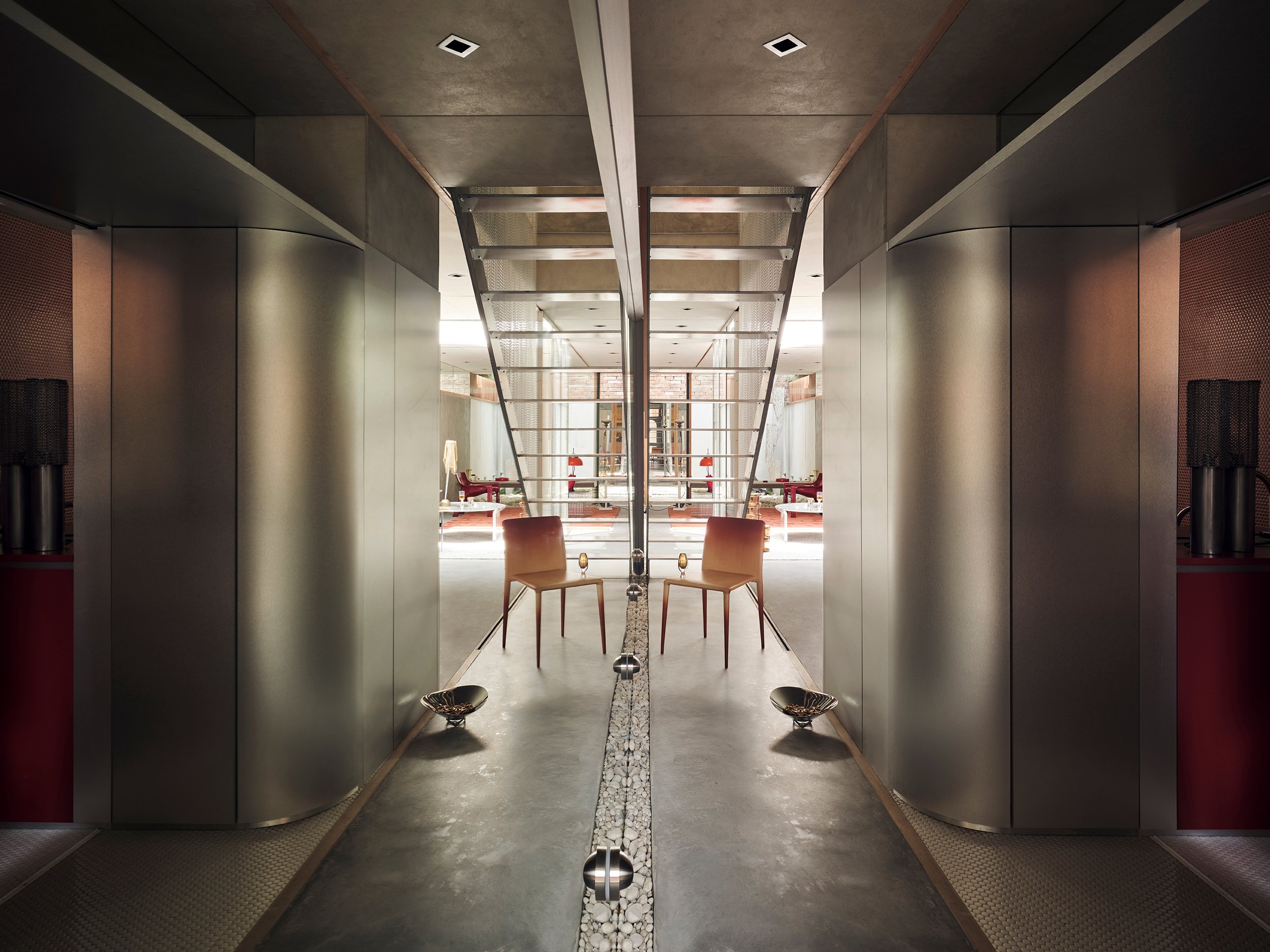
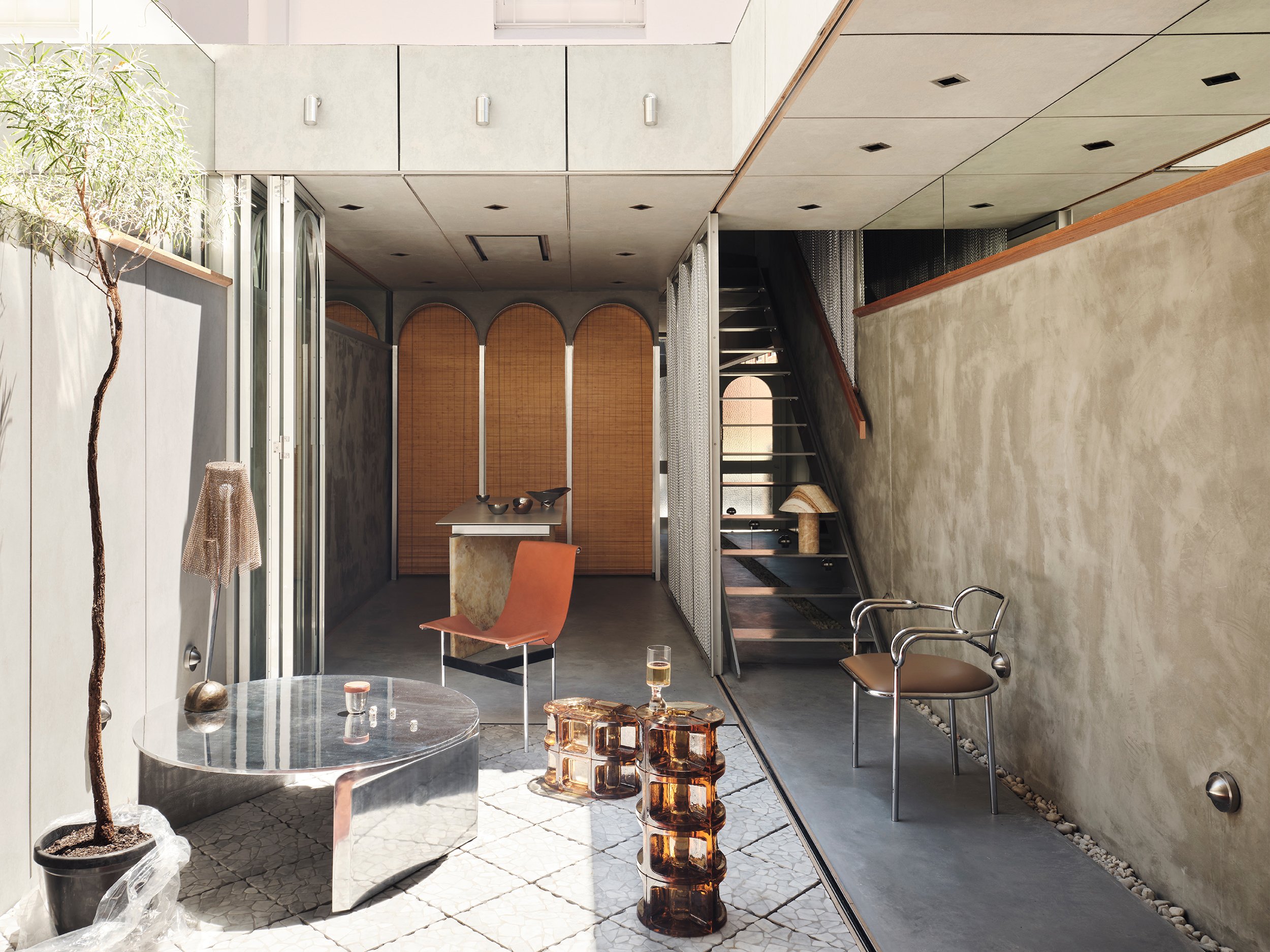
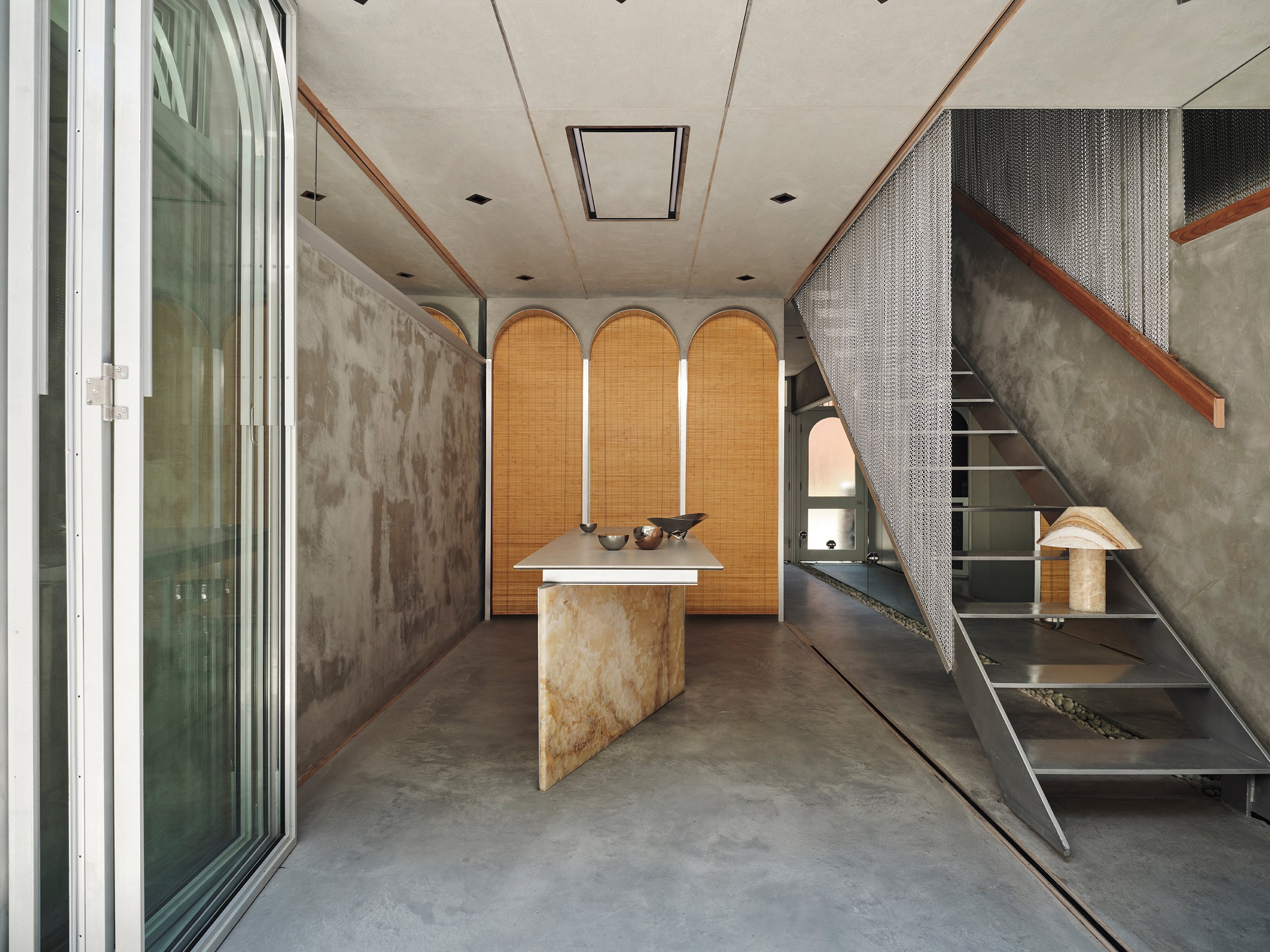
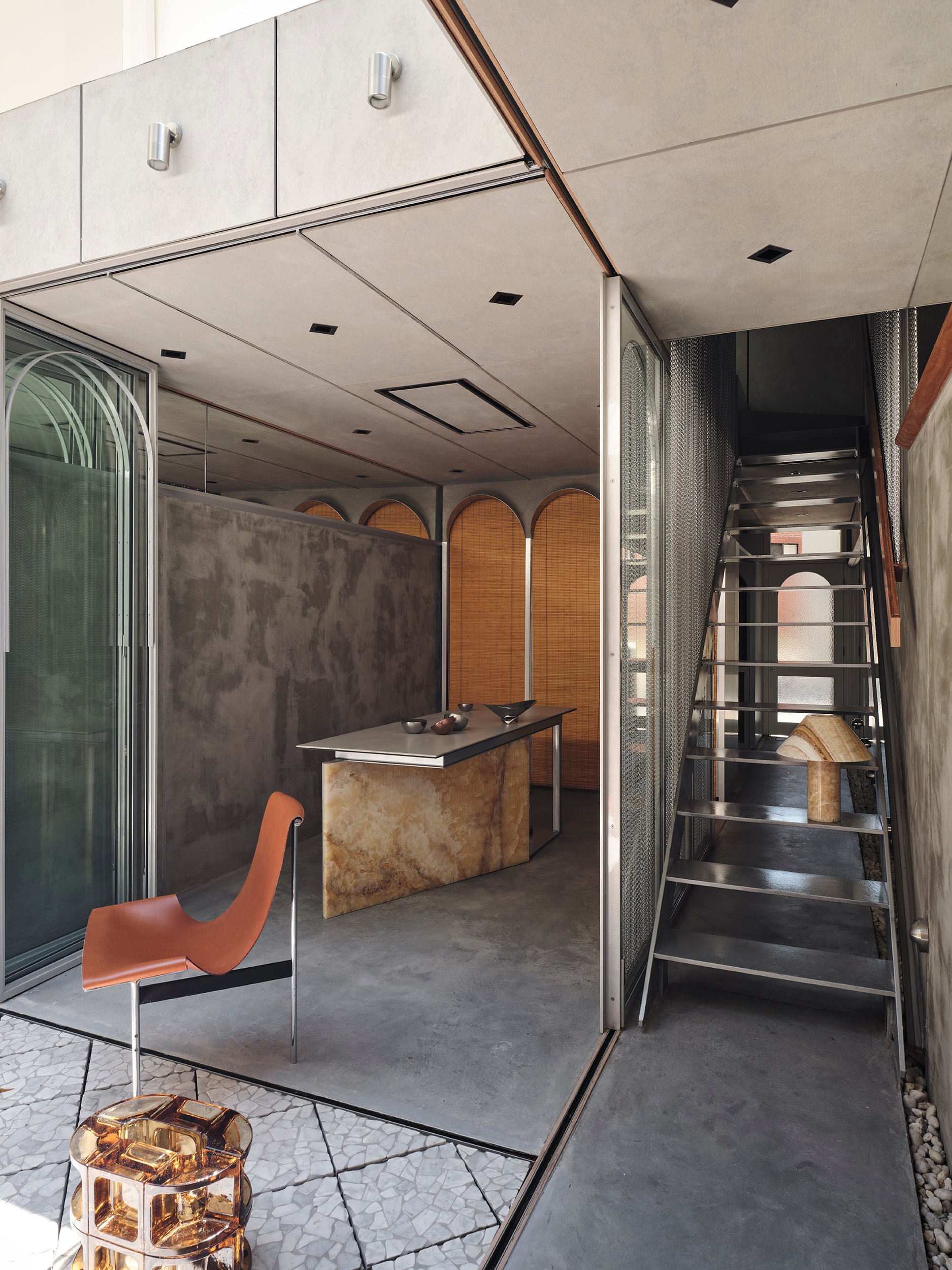
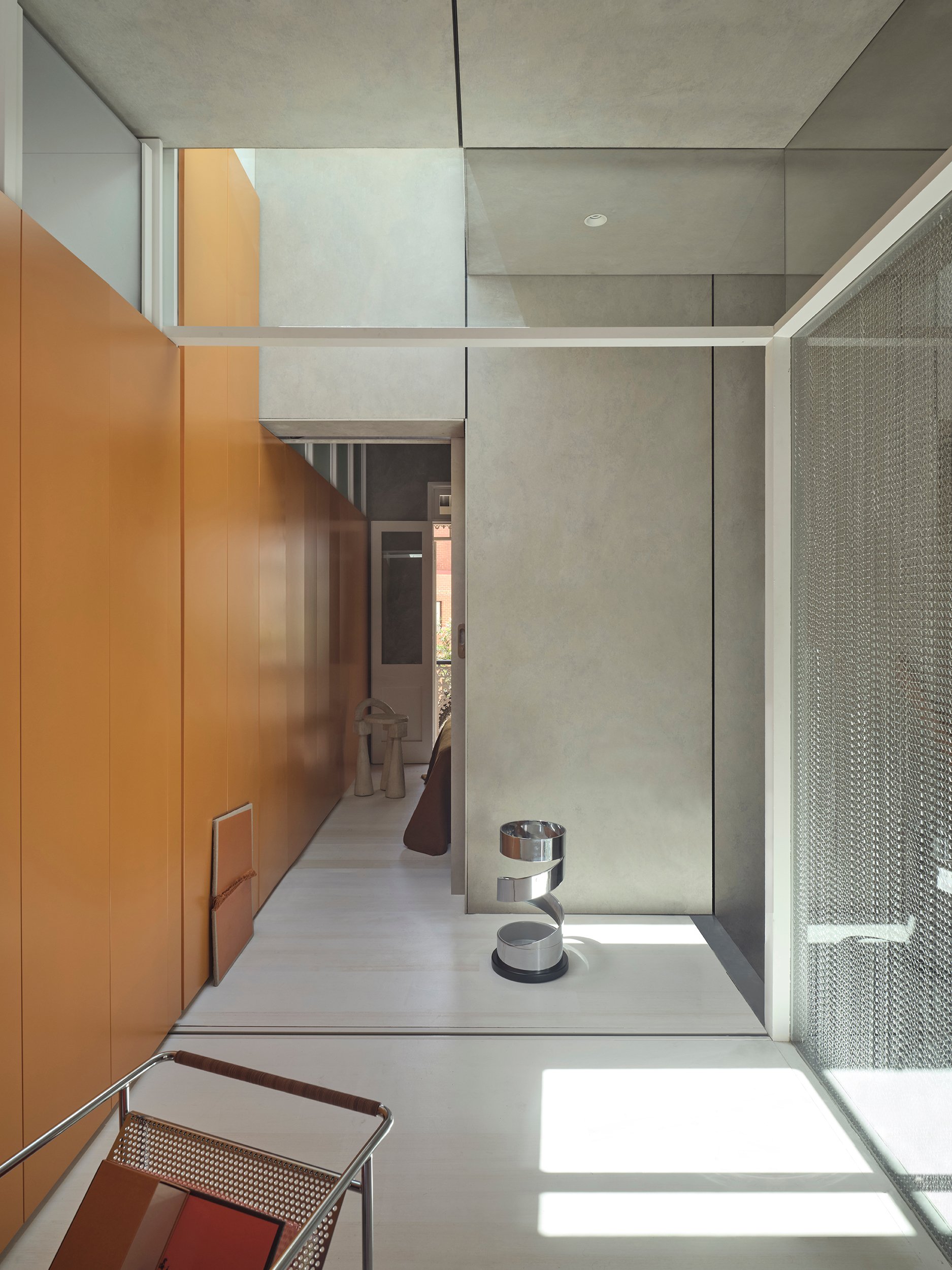
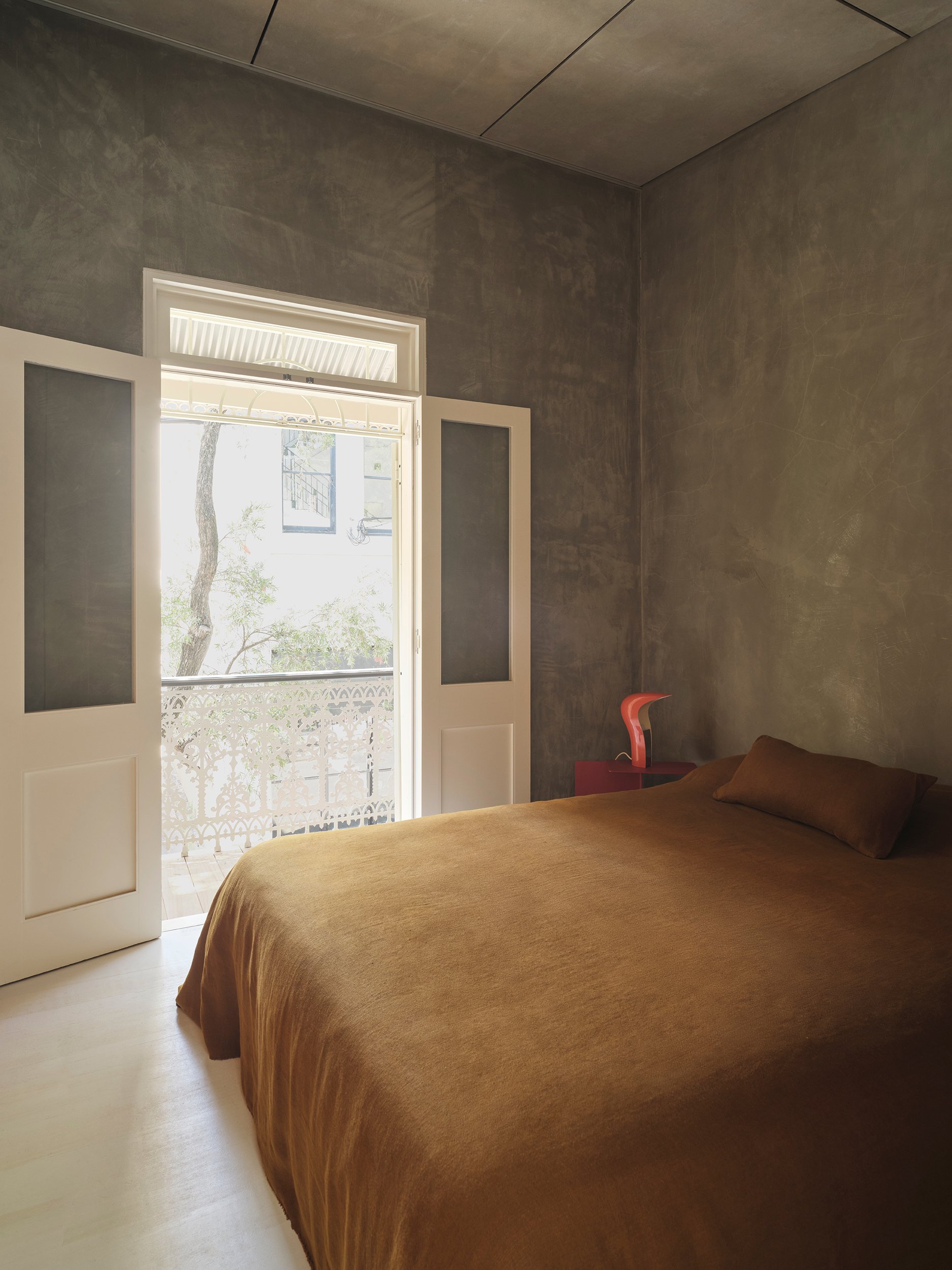
The project is underpinned by good strategic thinking – extending the usual act of removing the bathroom at the back to add a living area, to instead dissolve the terrace into the garden completely. On a very small block the house is just 3.3 metres wide and only 18.5 metres long, Victor has created an enfilade of sorts through the original house to a new kitchen-living-courtyard, and then beyond the limits of the house, both through the extensive use of mirrors at ground level and the “borrowed” canopy of the neighbour’s tree above.
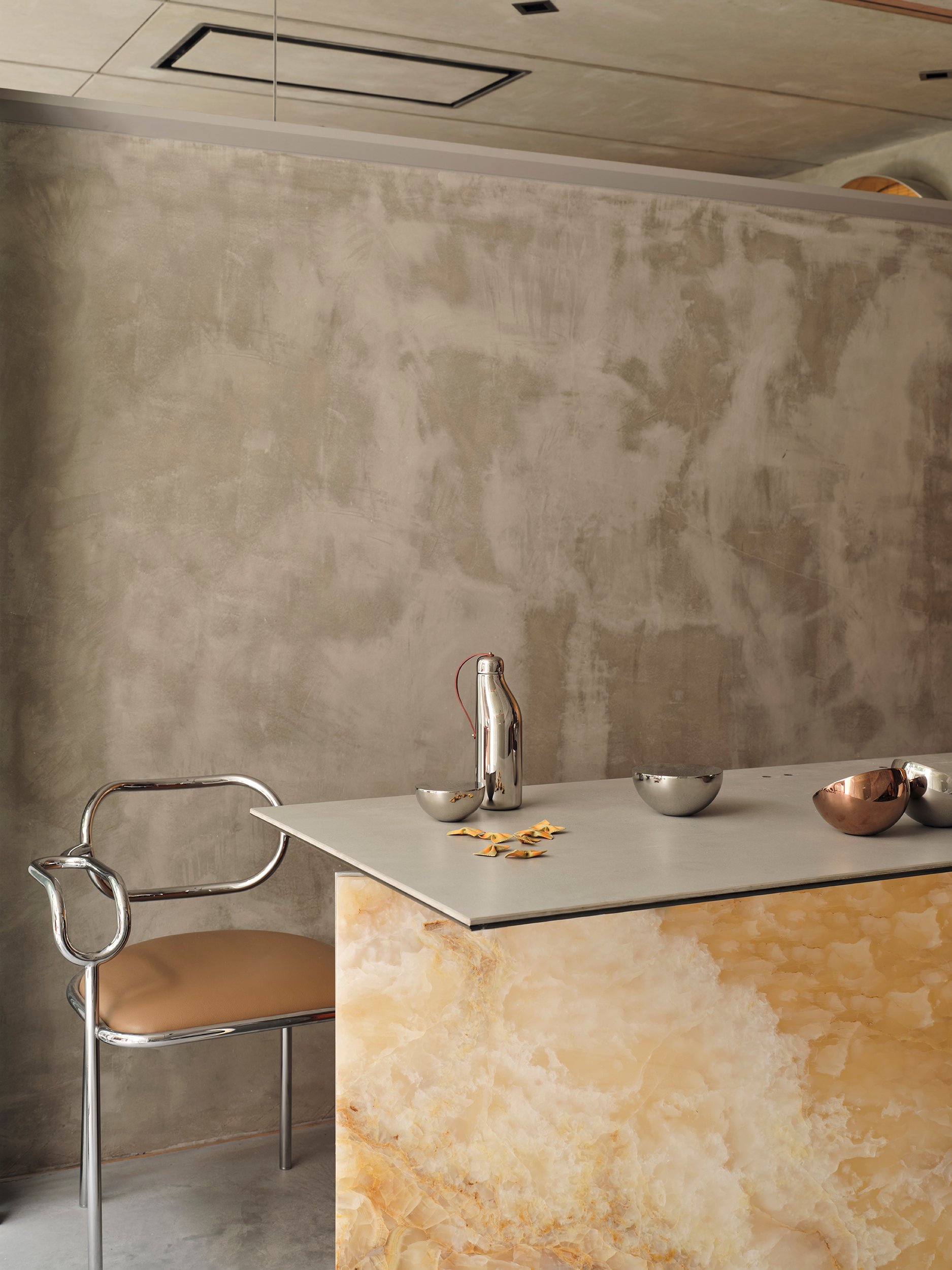
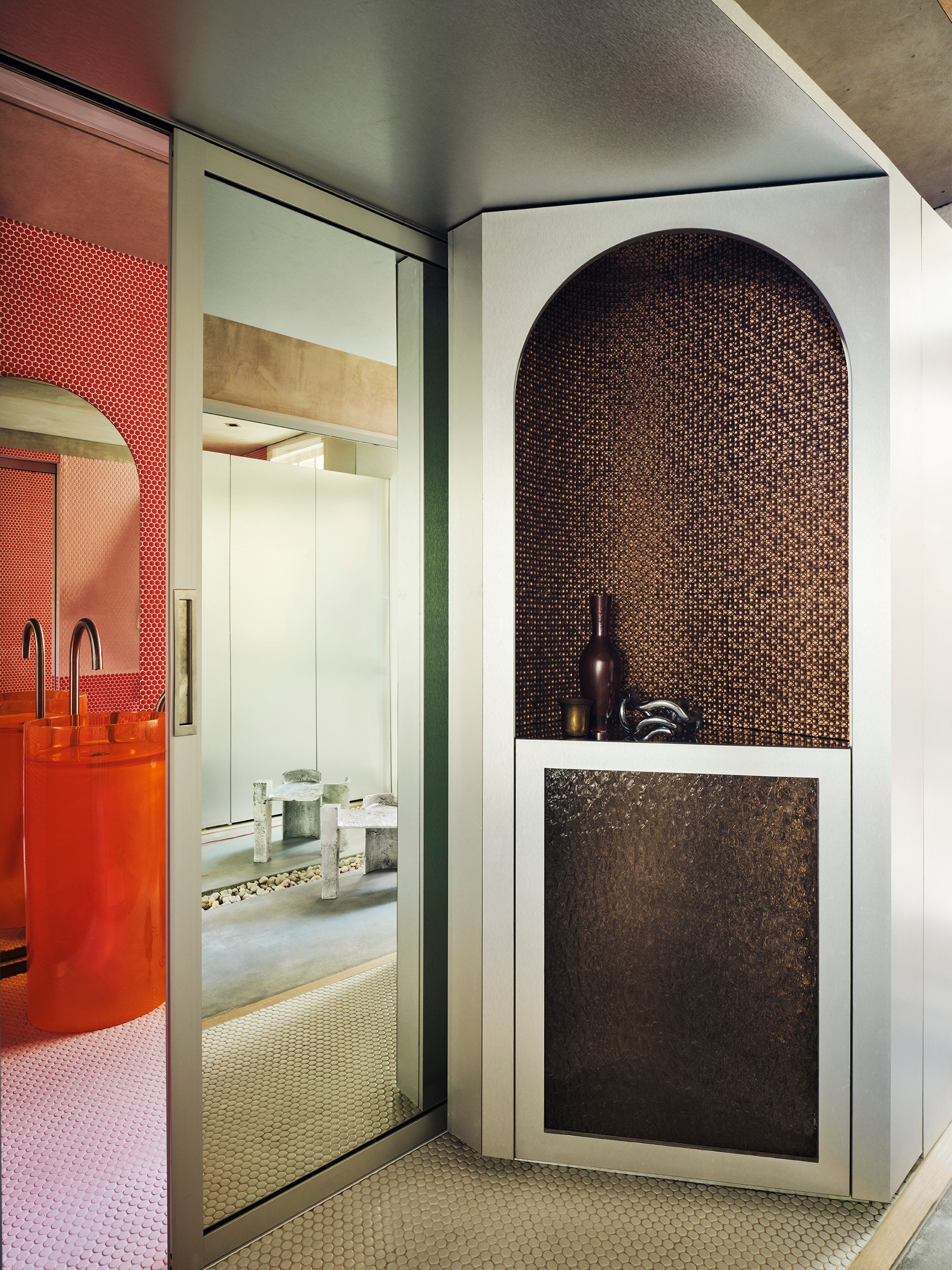
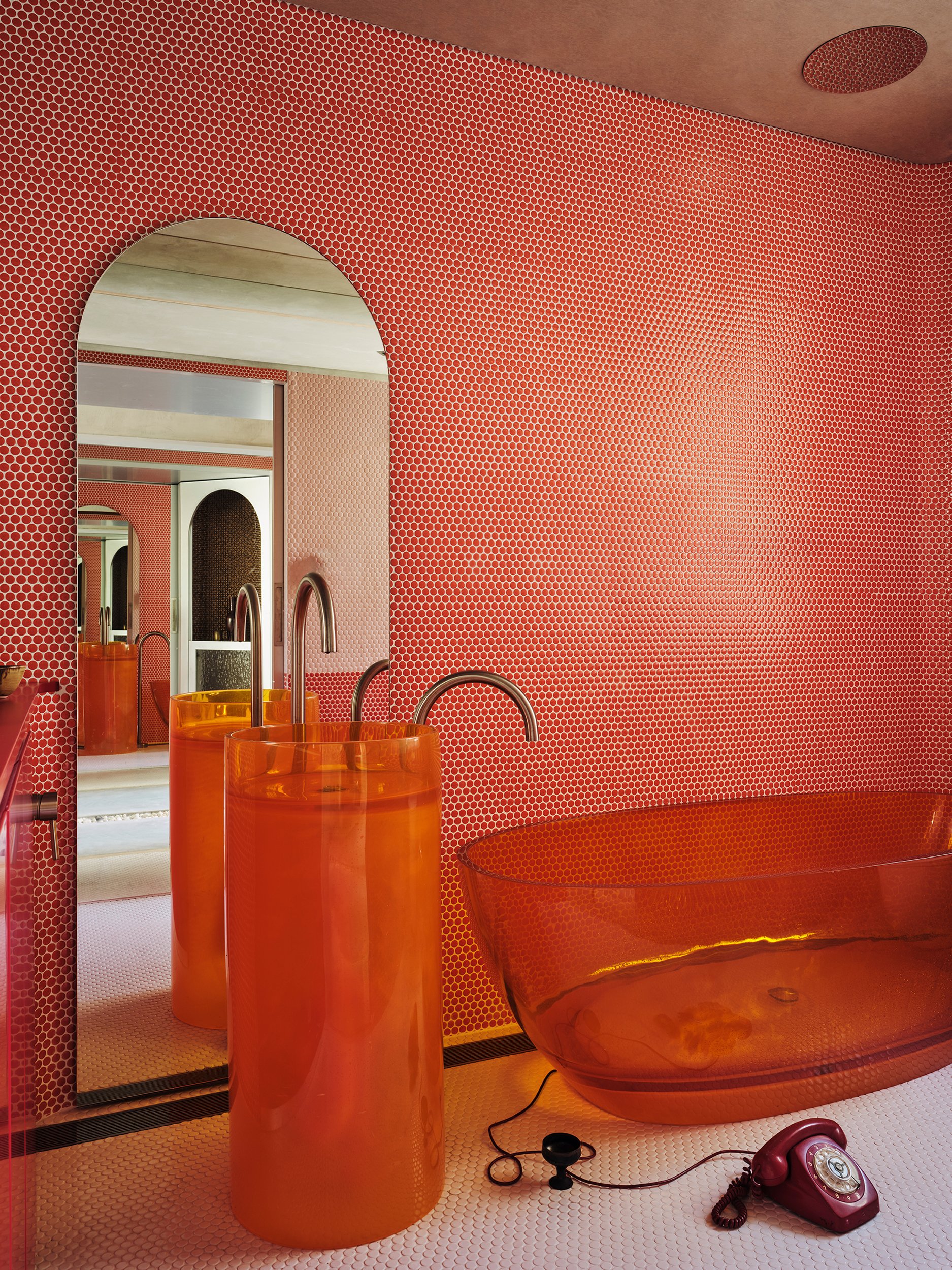
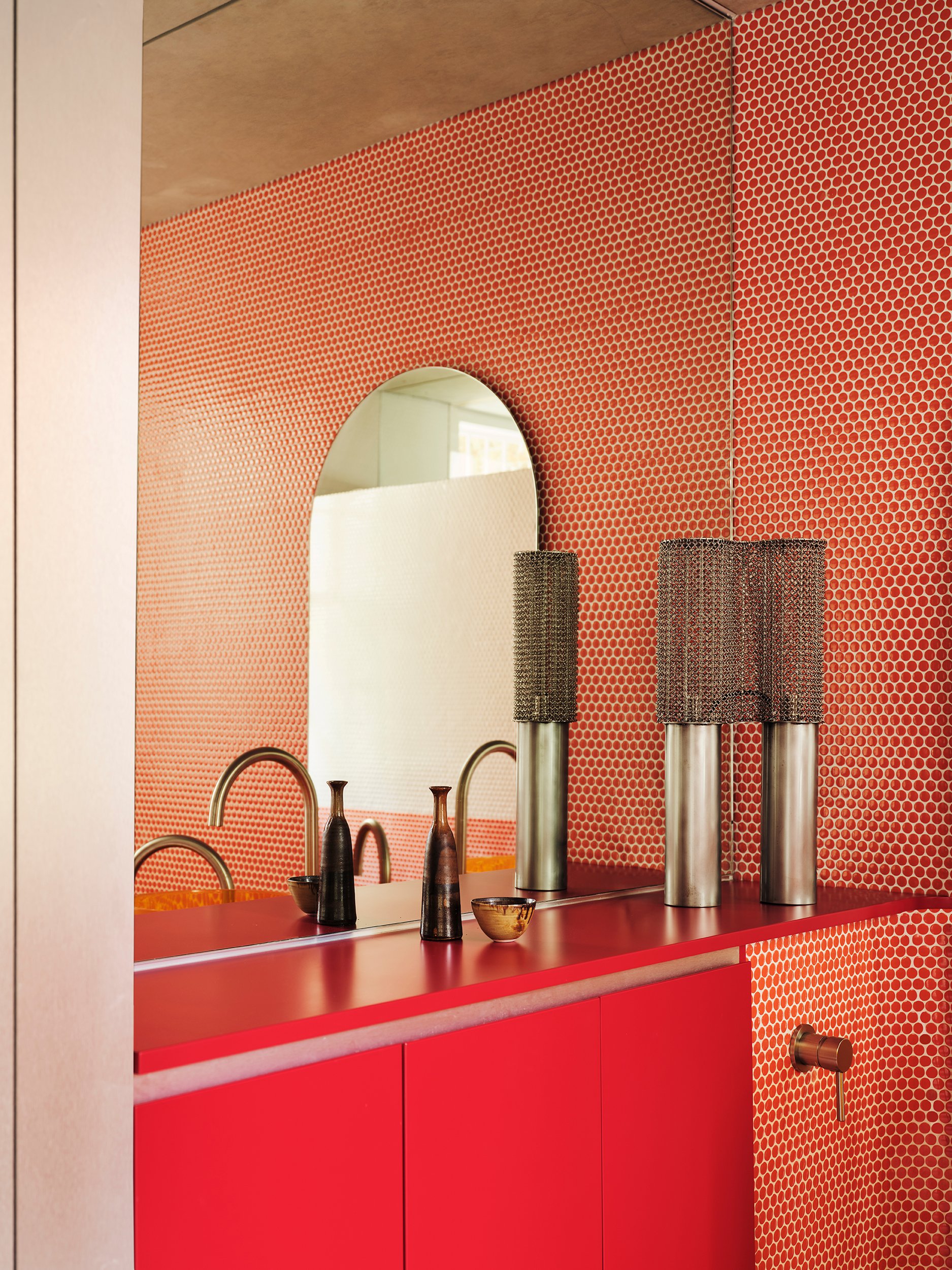
These strategic moves are executed superbly, utilising both conceptual clarity the stones that extend against the floor throughout, so you are never truly inside or outside and technical prowess hacking standard aluminium doors to reverse opening mechanisms and to ensure alignments between door and ceiling junctions. This expert – and, in terms of procurement, dogged – approach then underpins delightful moments of theatre: an all-orange bathroom featuring mirrors that expand the space both horizontally and vertically; a kitchen featuring Cordoban arches, bamboo roller blinds, bright orange appliances and a whole induction table above a piece of backlit onyx; and a circulation spine featuring an open-riser stair and chain mesh balustrades. All the way, doors swing and fold, blinds roll, furniture slides into location – a contortion of space in a project that, in other hands, would have been a conventional terrace refurb.
In that vein – of doing a lot with very little – this house is a critically important contribution to architecture in Australia. It is openly an extremely serious project – serious about architecture, serious about the typology and serious about how space and form manifest in a multicultural context. But this seriousness exists in tension with great humour and joy. The result is outstanding, equal perhaps to Tzannes’ Henwood House and Murcutt’s Magney House both in Paddington but without the budget or space they enjoy. As we seek ways of managing ever-increasing density, Terrace House Mirage is a project for these times, and will hopefully become a reference, or a standard, for what is possible.
Gerard Reinmuth
Houses magazine, Issue 161, December 2024.